


I feel like a kid at a candy store with the launch of ChatGPT ads. It’s like that moment in the 2000s when I launched my first Google AdWords campaign. Yes, I’m sortaaa old.
About a month ago I got off the waitlist for the beta of ChatGPT ads, so you know I zoomed straight into my first campaign creation.
I’m not claiming to be an expert since this channel is bonkers new, but I’d like to share initial thoughts, the strategies I’m testing and where I think the future of LLM ads are going.
Step 1: Campaign Foundation
The actual campaign creation flow is stupid simple. I expected this as there isn’t going to be all the fancy nuts and bolts for a new channel at the start. You have the option to bid on Reach or Clicks (Conversion bidding coming soon). With the Reach objective, you’re bidding on a CPM basis, and with Clicks it’s on a CPC basis.
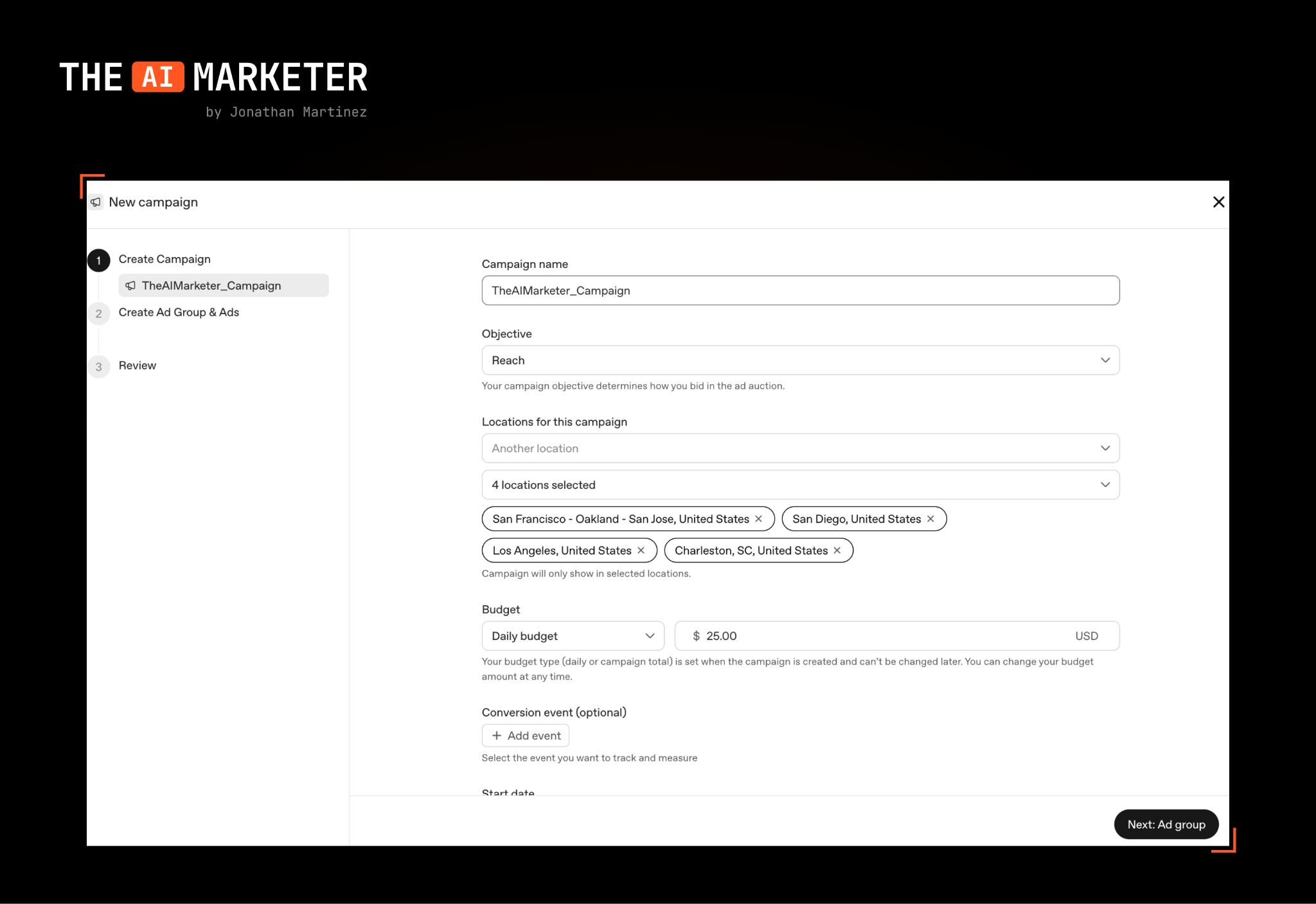
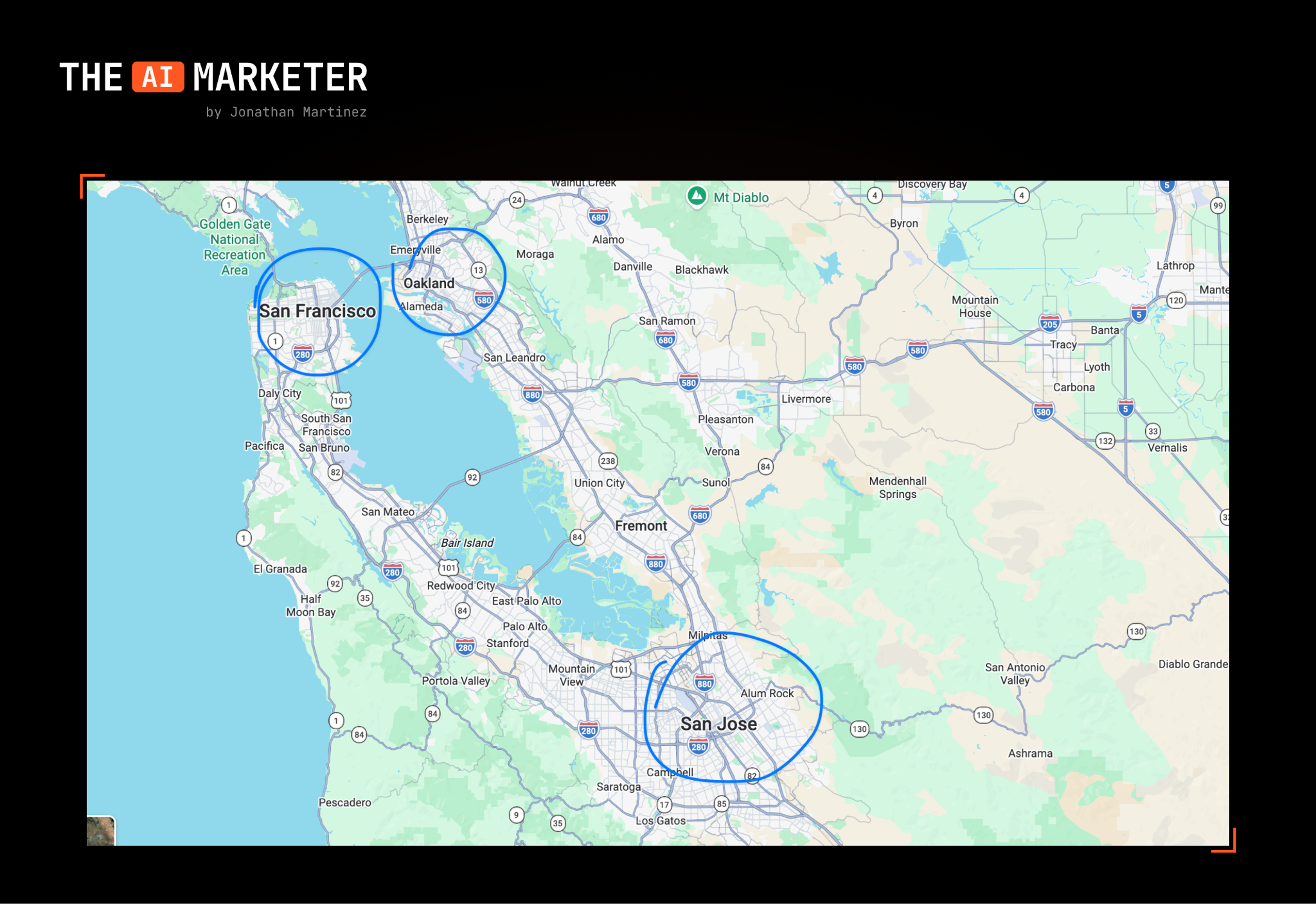
For location, you can set this at a country level, or use actual cities. I notice that most cities default to a DMA, meaning they’re targeting a cluster of cities. For example, the San Francisco DMA also includes San Jose, Oakland and a few other major cities in the Bay Area. Here’s a rough look at what the DMA includes (ft. my scribbles on Google Maps):
There’s an option to add a Conversion Event, but again, this isn’t something you can bid on just yet as it hasn’t launched.
Step 2: Ad Group Settings
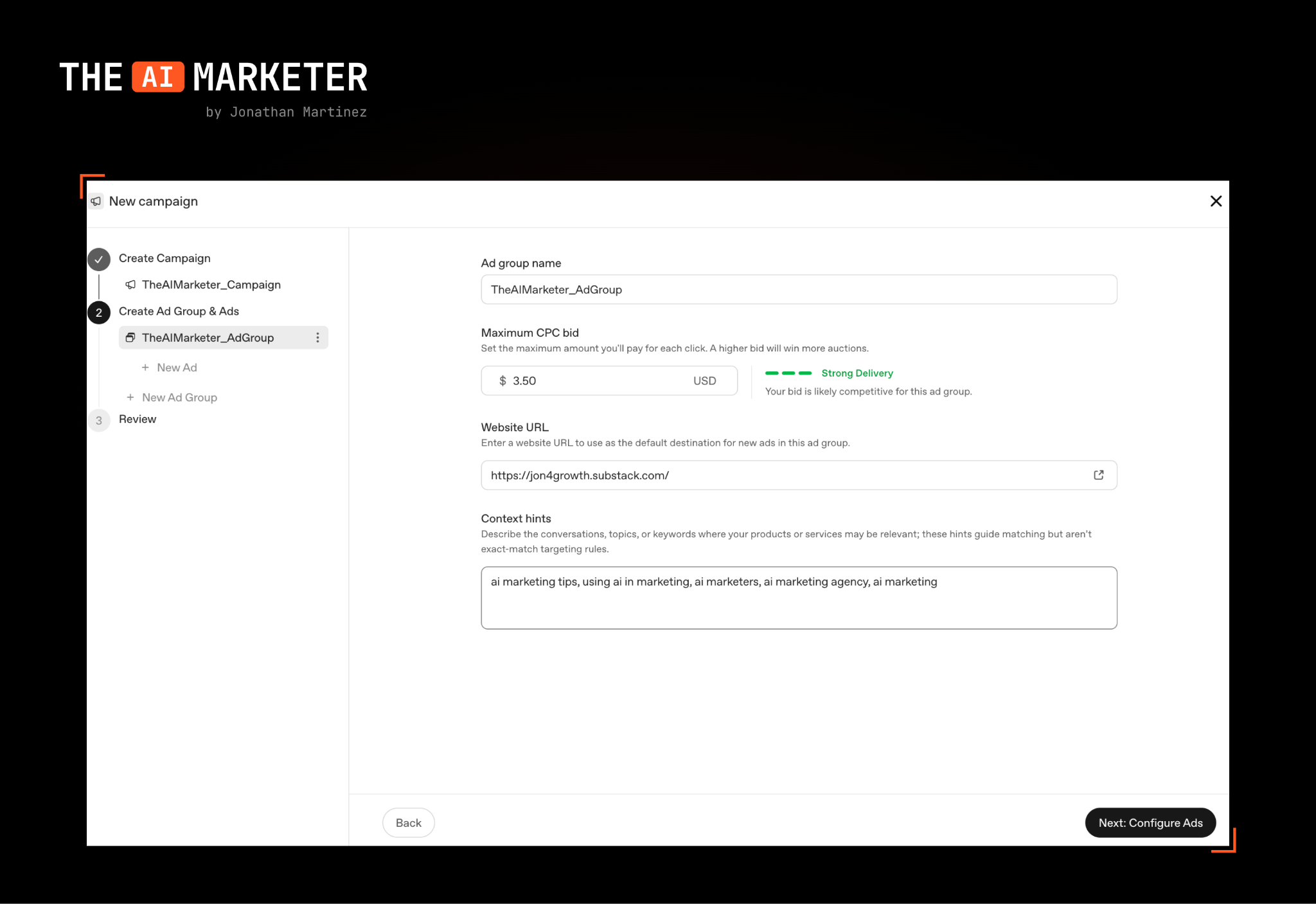
Within the ad group settings, you can set your CPC bid (Clicks bid type), website URL, along with “Context hints” which are essentially your keyword themes.
I want to take a minute to give my thoughts on this as it’s so important to how search is changing. We don’t have the ability to match for specific keywords, and that’s by design because of how user behavior is adjusting.
Google themselves have gotten ahead of this years ago by loosening what the exact match keyword type would trigger on campaigns. On Google’s website, they show that someone searching for “furniture store” or “home furniture shop” would bring up your ads with the same exact match keyword.
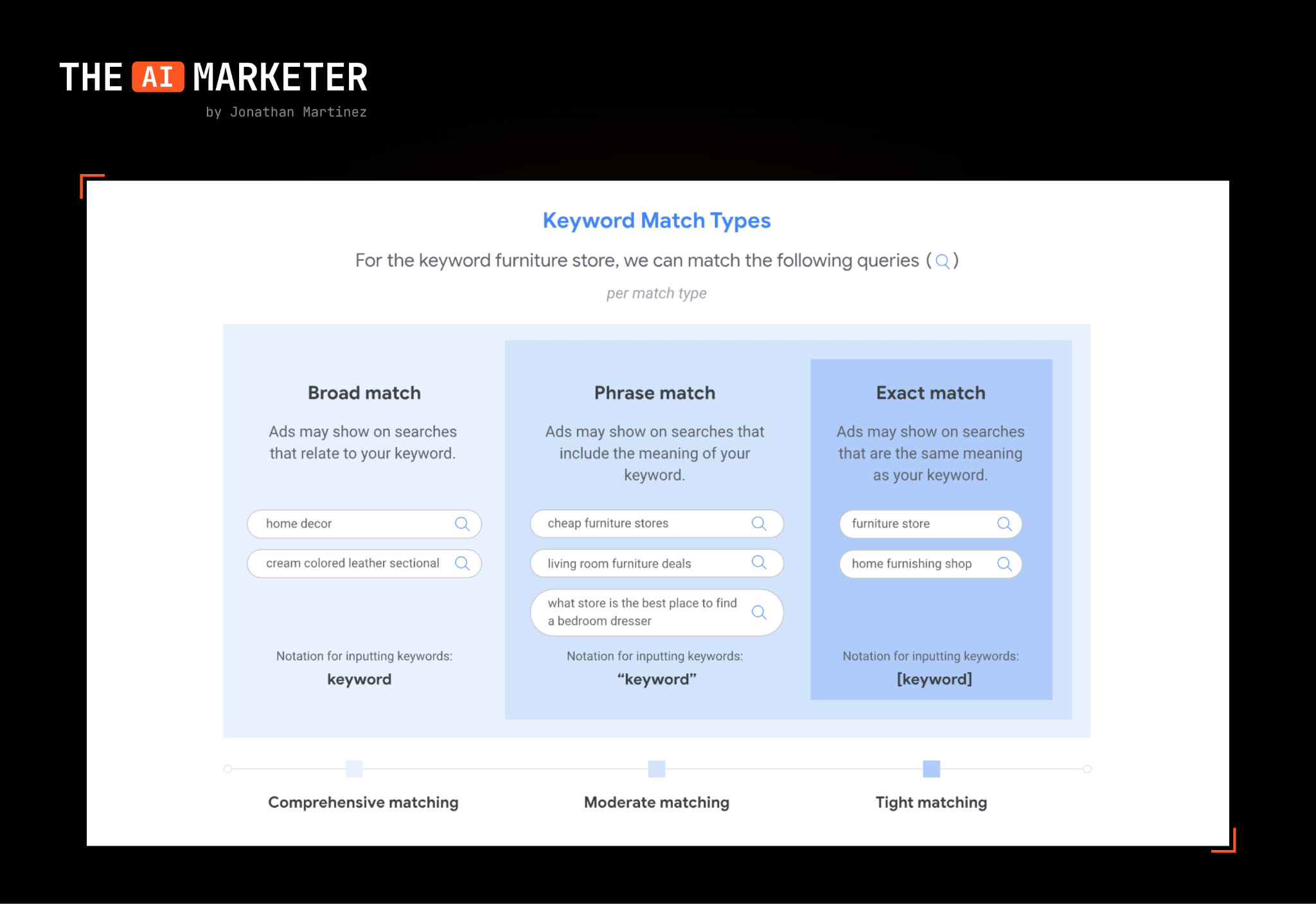
People are no longer searching “running shoes” and instead searching in sentences like “what are the best running shoes for hiking in rough terrain in the winter months” on ChatGPT.
This is why ChatGPT needs keyword themes known as “context hints” to display your ads.
From a strategy standpoint, you should be thinking about segmenting your ad groups by keyword clusters. These clusters can either be centered around intent, product type, service line, ICP you’re targeting, etc. I feel like there’ll be many variations to do this successfully until OpenAI eventually automates and gets amazing at targeting, similar to Meta nowadays.
Here’s an example of a poor “context hint” in your ad group:
“AI notetaker tool”
Compared to a strong “context hint” in your ad group:
“Executives that are evaluating AI notetakers for their growing organization and need a central resource for team meetings, sales calls, and customer calls.”
The strong version does a much better job of describing your ICP, their problem and the solution they’re looking for.
An easy way to think about writing out these “context hints” is to use the following structure:
ICP/ persona + problem + solution they’re looking for
When thinking about the type of phrase to write, also keep in mind the buyer’s journey when they’re searching on ChatGPT. They’re likely past the discovery stage, understand their problem and are actively looking for a solution. This is why LLMs will be great for middle of funnel and bottom of funnel traffic.
This should all be tested and validated with data, but it’s always good to keep in mind where your buyers are in their journey when on a specific platform.
Step 3: Creative + Conversion Tracking
For the final step before launching your first LLM ad, add your URL, headline, description and ad image.
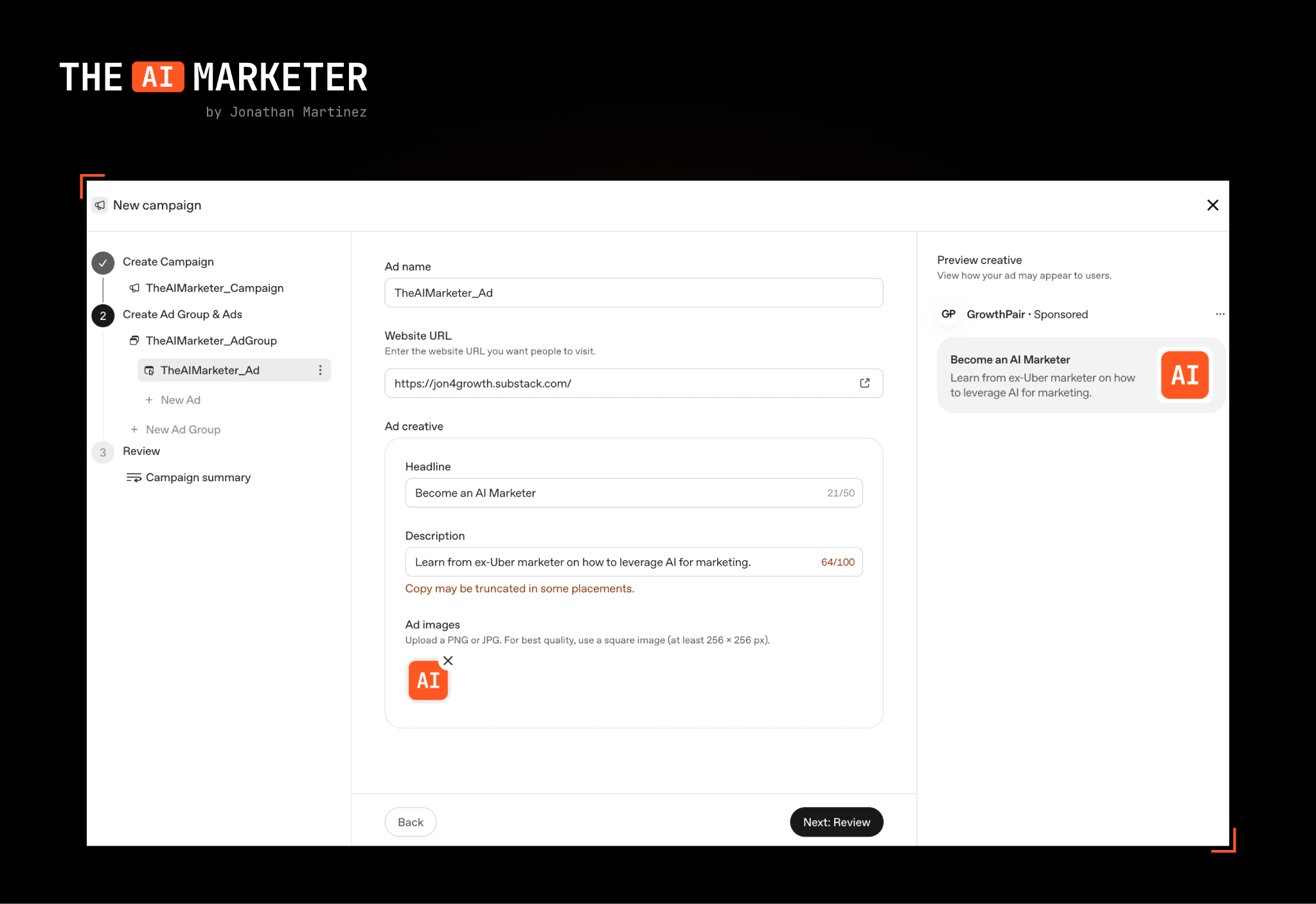
It’s important to note that copywriting for you ads should be much different on ChatGPT versus traditional Google search.
Google: AI Notetaker Tool | Only $9.99/ Month
ChatGPT: Haven’t found the perfect AI notetaker tool yet?
On ChatGPT, the description is capped at 100 characters and should read like a casual conversation. Remember: users are having a conversation with ChatGPT and you want your ad to feel as organic as possible in their chat window.
As I was writing this, OpenAI launched conversion tracking, so I jumped right into it. It’s a little manual of a setup, but here’s how I ran it:
Created a Data Source and pasted setup code in header section of website
Created Conversion Event to track booked discovery calls
Added “event call” code on the “thank you” page so that it fires on each load
It’s not as simple as tagging events on Meta or Google, but it gets the job done and isn’t the most difficult. I believe this’ll get easier as time goes on. If you’re wondering where to pull the event call code, click “View Code” for your main website tag, and you’ll see it in there. Super important to note that you’ll need to edit the event call code with your actual event name.
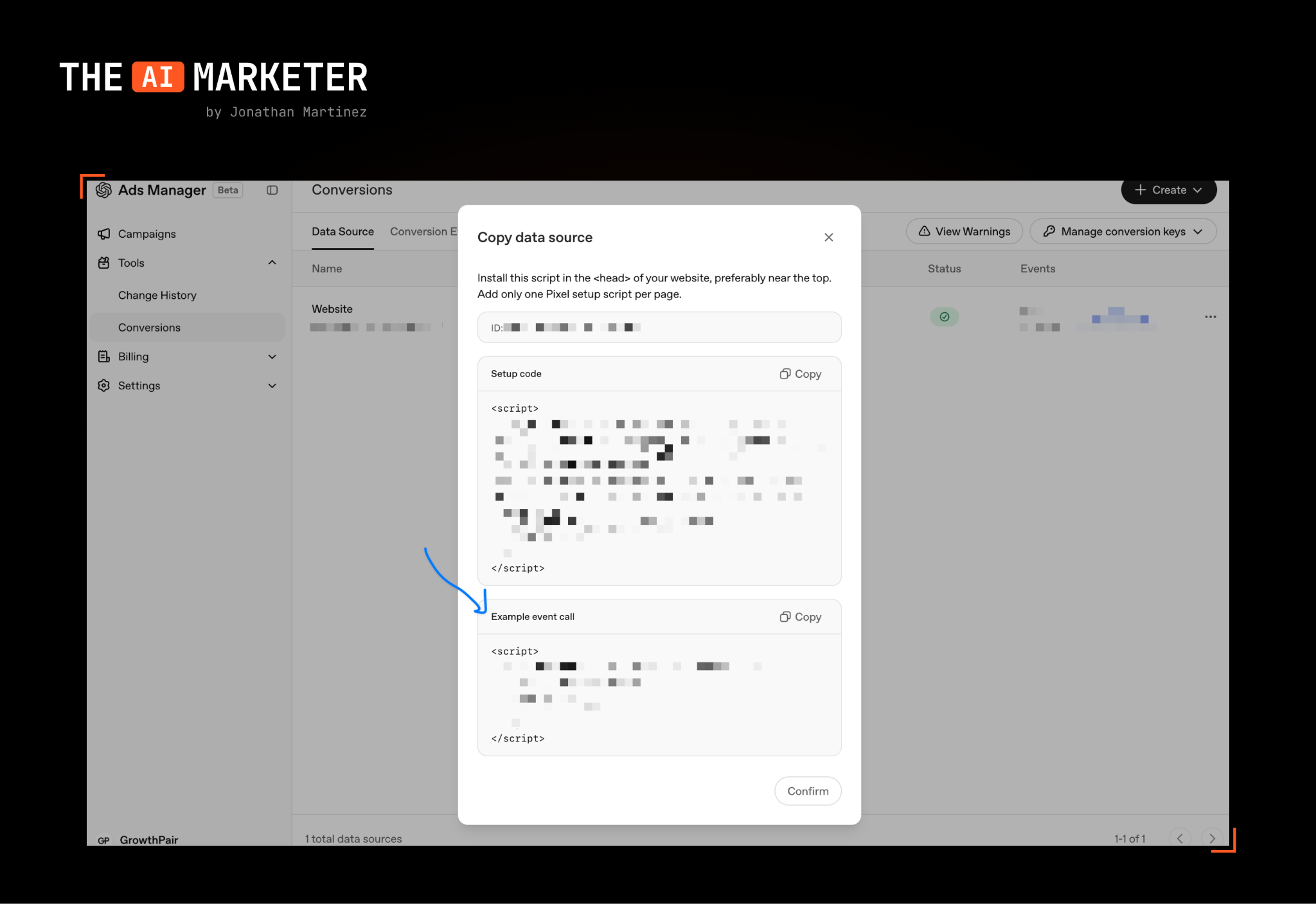
One big current limitation is that you can’t actually bid on Conversions yet. You solely have the ability to track them, which is still a huge win.
Where LLM ads fit in your stack
It’s still the first inning with LLM ads but OpenAI is giving us the first taste with ChatGPT ads. My main takeaways after running these ads for a month on what a sound strategy could look like (FYI, not an expert.. yet):
ChatGPT ads for middle of funnel and bottom of funnel. Consumers will likely be comparing options and making purchasing decisions. This is in contrast with a channel like Meta that can be used for the top of funnel (discovery) stage.
Keywords will be broad by nature → will lead to impression spread. Ensuring that you’re using the right keyword themes is more important than ever.
LLM conversation → dedicated landing page will crush it. Imagine comparing hiking shoes on ChatGPT, and you then land on a page with the comparison breakdown. The right ad leading to the right landing page matters more than ever.
Full-funnel strategy is still crucial and LLM ads are just one more piece to the puzzle, in combination with your other channels, organic content, retargeting, etc
Real performance data from month one
I’m being told by colleagues that are live with ChatGPT ads that we’re being throttled by OpenAI. I’ve increased my bids from $2 → $5 → $10 and still only getting dozens of impressions daily.
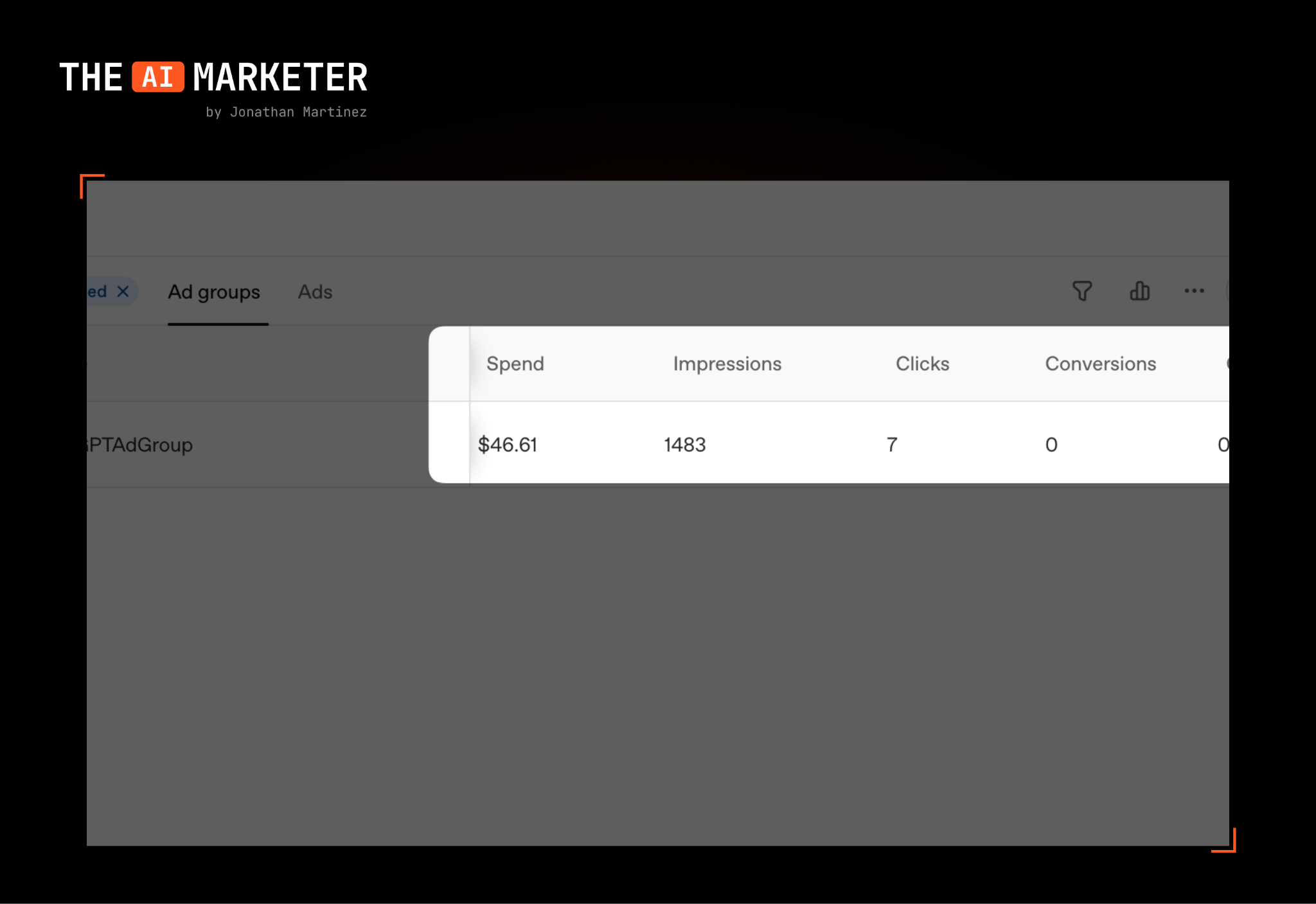
But we do have an idea on the CPC for my keyword themes centered around “hiring marketing talent” of around $6.65. To compare, this is about ¼ the cost we pay on Google for the same keywords, so the CPC is dirt cheap. Of course, we’ll need to keep an eye on conversion rates to see how they differ from other channels.
What to do this week
1. Get on the ChatGPT ads waitlist if you haven’t already
2. Map your current Google keyword clusters to ChatGPT “context hints”
3. Add conversion pixel to your site and map important events
4. Launch your first ads!
This is early days, but the CPCs are too good to ignore. Will report back with conversion data as I get more volume.
Until the next one,
Jonathan